Dark Facts About American Slavery
#history #historyfacts



-
0 Comments ·0 Shares ·13K Views ·0 Reviews
-
The Plantation Scandal History Tried to Erase | Dark American History
In the 1850s, a shocking scandal involving a plantation owner exposed a hidden secret that quickly spread through the community. What followed became a public spectacle and a powerful warning that people remembered for generations.
This dark chapter of American history reveals how scandal, punishment, and public shame could collide in the antebellum South.
#darkhistoryfacts#americanhistorymuseum#historyfacts#hiddenhistorymuseum#ForgottenHistory#slaveryhistory#AntebellumHistory#HistoricalFacts#UntoldHistoryThe Plantation Scandal History Tried to Erase | Dark American History In the 1850s, a shocking scandal involving a plantation owner exposed a hidden secret that quickly spread through the community. What followed became a public spectacle and a powerful warning that people remembered for generations. This dark chapter of American history reveals how scandal, punishment, and public shame could collide in the antebellum South. #darkhistoryfacts#americanhistorymuseum#historyfacts#hiddenhistorymuseum#ForgottenHistory#slaveryhistory#AntebellumHistory#HistoricalFacts#UntoldHistory0 Comments ·0 Shares ·17K Views ·0 Reviews -
On this day in 1834 slavery ended in the British Empire, and the compensation went to the slaveholders
On 1 August 1834, the Slavery Abolition Act came into force across most of the British Empire. On paper, hundreds of thousands of enslaved Africans and their descendants were declared free. It is remembered as one of the great moral corrections in history, and today it is marked as Emancipation Day across Jamaica, Trinidad and Tobago, Barbados, Guyana, Grenada and beyond.
But read the full title of the law Britain actually passed. An Act for the Abolition of Slavery throughout the British Colonies, for promoting the Industry of the manumitted Slaves, and for compensating the Persons hitherto entitled to the Services of such Slaves. Compensation. Not for the people who had been owned, worked, whipped and sold. For the people who had owned them.
Britain paid out around £20 million to more than 40,000 slave owners for the loss of what the law called their property. That sum was roughly 40 percent of the entire national budget at the time, one of the largest payouts in British history. The formerly enslaved received nothing at all. Not land, not wages for generations of stolen labour, not a shilling. As one account of the period put it, the prevailing feeling was that their freedom was compensation enough.
And freedom itself was delayed. Everyone over the age of six was reclassified as an apprentice, forced to keep working unpaid for their former owners, up to 45 hours a week. Household workers were bound for four years, field workers for six. Slavery had simply changed its name.
The people it was done to saw through it instantly. On that very first day, 1 August 1834, in Port of Spain, Trinidad, a crowd of mostly elderly formerly enslaved people stood before the Governor as he explained the new arrangement, and drowned him out with a chant. Pas de six ans. Point de six ans. Not six years. No six years. They kept protesting until the system broke. Apprenticeship was abolished early, and full freedom came on 1 August 1838. The enslaved freed themselves from the second trap too.
Now here is the fact that should be taught in every school on this continent and in the diaspora. Because that £20 million was borrowed and partly converted into government annuities, British taxpayers were still repaying the loan used to compensate slave owners until **2015**. Britain spent 180 years paying the families of slaveholders. It has never paid one penny to the descendants of the enslaved.
So when Britain says today that reparations are too complicated, too historical, too expensive to calculate, remember that it already calculated the value of every enslaved African with total precision. It just paid the money to the wrong people, and kept paying for nearly two centuries.
#HistoricalAfrica #EmancipationDay #Reparations #BlackHistory #SlaveryOn this day in 1834 slavery ended in the British Empire, and the compensation went to the slaveholders On 1 August 1834, the Slavery Abolition Act came into force across most of the British Empire. On paper, hundreds of thousands of enslaved Africans and their descendants were declared free. It is remembered as one of the great moral corrections in history, and today it is marked as Emancipation Day across Jamaica, Trinidad and Tobago, Barbados, Guyana, Grenada and beyond. But read the full title of the law Britain actually passed. An Act for the Abolition of Slavery throughout the British Colonies, for promoting the Industry of the manumitted Slaves, and for compensating the Persons hitherto entitled to the Services of such Slaves. Compensation. Not for the people who had been owned, worked, whipped and sold. For the people who had owned them. Britain paid out around £20 million to more than 40,000 slave owners for the loss of what the law called their property. That sum was roughly 40 percent of the entire national budget at the time, one of the largest payouts in British history. The formerly enslaved received nothing at all. Not land, not wages for generations of stolen labour, not a shilling. As one account of the period put it, the prevailing feeling was that their freedom was compensation enough. And freedom itself was delayed. Everyone over the age of six was reclassified as an apprentice, forced to keep working unpaid for their former owners, up to 45 hours a week. Household workers were bound for four years, field workers for six. Slavery had simply changed its name. The people it was done to saw through it instantly. On that very first day, 1 August 1834, in Port of Spain, Trinidad, a crowd of mostly elderly formerly enslaved people stood before the Governor as he explained the new arrangement, and drowned him out with a chant. Pas de six ans. Point de six ans. Not six years. No six years. They kept protesting until the system broke. Apprenticeship was abolished early, and full freedom came on 1 August 1838. The enslaved freed themselves from the second trap too. Now here is the fact that should be taught in every school on this continent and in the diaspora. Because that £20 million was borrowed and partly converted into government annuities, British taxpayers were still repaying the loan used to compensate slave owners until **2015**. Britain spent 180 years paying the families of slaveholders. It has never paid one penny to the descendants of the enslaved. So when Britain says today that reparations are too complicated, too historical, too expensive to calculate, remember that it already calculated the value of every enslaved African with total precision. It just paid the money to the wrong people, and kept paying for nearly two centuries. #HistoricalAfrica #EmancipationDay #Reparations #BlackHistory #Slavery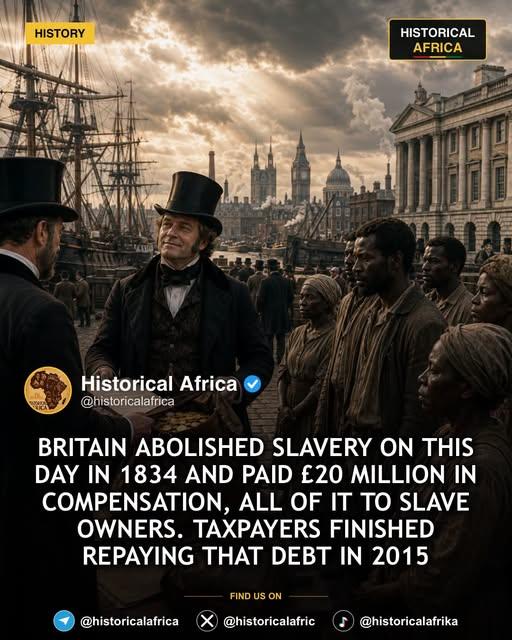 0 Comments ·0 Shares ·14K Views ·0 Reviews
 -
Rose Williams was sixteen years old when her enslaver told her she'd been paired with a man named Rufus to produce children. When Rufus climbed into her bed, she grabbed a fireplace poker. Her mistress told her plainly: "De massa wants yous to raise him chillens." Her enslaver threatened the whipping stake if she refused. She thought about her mother — also bought at the same auction — and made the only choice she had. She had two children. The day she was freed, she left and never returned. In 1937, at over ninety years old, she told a government interviewer everything. "I never marries," she said, "'cause one 'sperience am 'nough."
#BlackHistory #HiddenHistory #AmericanHistory #SlaveryHistory #historymattersRose Williams was sixteen years old when her enslaver told her she'd been paired with a man named Rufus to produce children. When Rufus climbed into her bed, she grabbed a fireplace poker. Her mistress told her plainly: "De massa wants yous to raise him chillens." Her enslaver threatened the whipping stake if she refused. She thought about her mother — also bought at the same auction — and made the only choice she had. She had two children. The day she was freed, she left and never returned. In 1937, at over ninety years old, she told a government interviewer everything. "I never marries," she said, "'cause one 'sperience am 'nough." #BlackHistory #HiddenHistory #AmericanHistory #SlaveryHistory #historymatters0 Comments ·0 Shares ·10K Views ·0 Reviews -
He was born a free man in New York.
A violinist. A husband. A father.
Then two men offered him work… and everything changed.
Drugged. Chained. Sold into slavery.
For 12 years, Solomon Northup fought to survive. Then this happened...
💡 The true story that exposed the brutality of slavery to the world.
🎬 Watch his story now.
👇 Do you think stories like his changed minds? #SolomonNorthup #12YearsASlave #SlaveryHistory #TrueStory #AmericanHistoryHe was born a free man in New York. A violinist. A husband. A father. Then two men offered him work… and everything changed. Drugged. Chained. Sold into slavery. For 12 years, Solomon Northup fought to survive. Then this happened... 💡 The true story that exposed the brutality of slavery to the world. 🎬 Watch his story now. 👇 Do you think stories like his changed minds? #SolomonNorthup #12YearsASlave #SlaveryHistory #TrueStory #AmericanHistory0 Comments ·0 Shares ·10K Views ·0 Reviews·1
-
#slavery #USHistory #BlackHistory0 Comments ·0 Shares ·5K Views ·0 Reviews·1
-
The Name of Blood
A freed man rejects his former master’s name and chooses the name slavery could never erase.
#TheNameOfBlood #LifeAfterFreedom #FreedomStory #SlaveMovieThe Name of Blood A freed man rejects his former master’s name and chooses the name slavery could never erase. #TheNameOfBlood #LifeAfterFreedom #FreedomStory #SlaveMovie0 Comments ·0 Shares ·6K Views ·0 Reviews·2
-
n 1936, a formerly enslaved man named Prince Smith described it to a government interviewer: a wooden box, barely tall enough to stand in, no room to sit or lie down, locked in direct sunlight for days. Some overseers called it the humane option — because unlike a whip, it left no marks. No visible scars meant no questions from buyers or visitors. The suffering was entirely invisible from the outside. That was exactly the point. His account is in the Library of Congress. So are hundreds like it.
#BlackHistory #HiddenHistory #AmericanHistory #SlaveryHistoryn 1936, a formerly enslaved man named Prince Smith described it to a government interviewer: a wooden box, barely tall enough to stand in, no room to sit or lie down, locked in direct sunlight for days. Some overseers called it the humane option — because unlike a whip, it left no marks. No visible scars meant no questions from buyers or visitors. The suffering was entirely invisible from the outside. That was exactly the point. His account is in the Library of Congress. So are hundreds like it. #BlackHistory #HiddenHistory #AmericanHistory #SlaveryHistory0 Comments ·0 Shares ·9K Views ·0 Reviews -
A soldier in New Orleans in 1815 wrote about a man named George wearing a spiked iron collar that made sleep physically impossible. Four spikes, angled so lying down in any direction drove metal into the ground beneath him. Some collars had bells on iron rods above the wearer's head — so an escaping person could be tracked by sound in the dark. Formerly enslaved man Moses Roper called them "an instrument of torture" in his 1838 memoir. A collar used on a man named Ben after his third escape attempt stayed in the enslaver's family for 175 years before being donated to a museum. Surviving examples are in museums today.
#BlackHistory #HiddenHistory #AmericanHistory #SlaveryHistory #historymattersA soldier in New Orleans in 1815 wrote about a man named George wearing a spiked iron collar that made sleep physically impossible. Four spikes, angled so lying down in any direction drove metal into the ground beneath him. Some collars had bells on iron rods above the wearer's head — so an escaping person could be tracked by sound in the dark. Formerly enslaved man Moses Roper called them "an instrument of torture" in his 1838 memoir. A collar used on a man named Ben after his third escape attempt stayed in the enslaver's family for 175 years before being donated to a museum. Surviving examples are in museums today. #BlackHistory #HiddenHistory #AmericanHistory #SlaveryHistory #historymatters1 Comments ·0 Shares ·10K Views ·0 Reviews·2
-
In 1818, a twelve-year-old girl named Chloe sold at a New Orleans auction for $1,800 — more than the prime field hands who sold the same day for $1,250 each. The buyers called it the “fancy trade.” Enslaved girls chosen for their appearance were auctioned at premium prices, explicitly for forced concubinage, using coded language everyone in the room understood. New Orleans sold over 135,000 people across 50+ documented locations. The bills of sale still exist. Chloe’s last name was never recorded. #fancytrade #blackhistory #AmericanHistory #slaveryIn 1818, a twelve-year-old girl named Chloe sold at a New Orleans auction for $1,800 — more than the prime field hands who sold the same day for $1,250 each. The buyers called it the “fancy trade.” Enslaved girls chosen for their appearance were auctioned at premium prices, explicitly for forced concubinage, using coded language everyone in the room understood. New Orleans sold over 135,000 people across 50+ documented locations. The bills of sale still exist. Chloe’s last name was never recorded. #fancytrade #blackhistory #AmericanHistory #slavery0 Comments ·0 Shares ·7K Views ·0 Reviews·
2
-
Enslaved Mothers Were FORCED to Feed White Babies First - This Law Was REAL#darkhistory #slaveryEnslaved Mothers Were FORCED to Feed White Babies First - This Law Was REAL#darkhistory #slavery2 Comments ·0 Shares ·6K Views ·0 Reviews·
 5
5
-
THE MAN WHO FOUND HIS FAMILY AFTER 40 YEARS
At age 6, Peter Still was separated from his mother and brother and sold into slavery.
For decades, he had no idea where they were.
No letters.
No reunions.
No way home.
After eventually buying his freedom, Peter began searching for the family he had lost as a child.
What he didn’t know was that his brother William Still had become one of the most important conductors of the Underground Railroad.
After nearly 40 years apart, the brothers finally found each other.
One of the most emotional family reunions in American history.
Because slavery could separate a family.
But it couldn’t erase the hope of finding them again.
Support to keep HISTORA alive. The full archive is available at historalegacy.com.
We do not glorify violence. We reveal truth so history can’t repeat itself.
#BlackHistory #PeterStill #HiddenHistory #AmericanHistoryTHE MAN WHO FOUND HIS FAMILY AFTER 40 YEARS At age 6, Peter Still was separated from his mother and brother and sold into slavery. For decades, he had no idea where they were. No letters. No reunions. No way home. After eventually buying his freedom, Peter began searching for the family he had lost as a child. What he didn’t know was that his brother William Still had become one of the most important conductors of the Underground Railroad. After nearly 40 years apart, the brothers finally found each other. One of the most emotional family reunions in American history. Because slavery could separate a family. But it couldn’t erase the hope of finding them again. Support to keep HISTORA alive. The full archive is available at historalegacy.com. We do not glorify violence. We reveal truth so history can’t repeat itself. #BlackHistory #PeterStill #HiddenHistory #AmericanHistory0 Comments ·0 Shares ·14K Views ·0 Reviews·
3
More Results