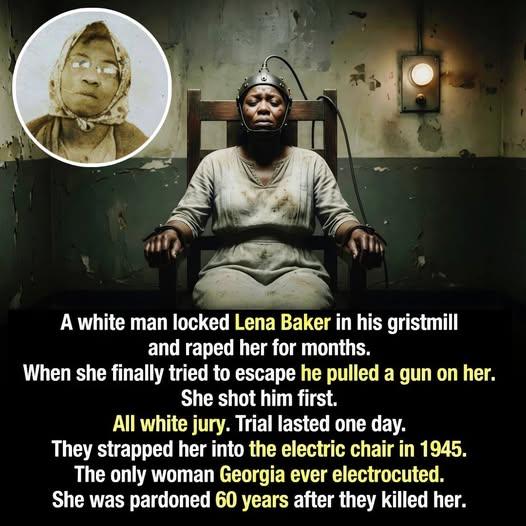


Lena Baker was the only woman ever executed by the state of Georgia.
In 1944, Lena Baker, a Black woman from rural Georgia, killed Ernest Knight, a white man. Baker said he had held her captive in his gristmill, repeatedly sexually assaulted her, and threatened her with a pistol when she tried to escape.
During the struggle, she shot him.
She was arrested, tried before an all-white, all-male jury, and convicted of murder. The trial lasted just one day, and after only a brief deliberation, the jury sentenced her to death.
On March 5, 1945, Lena Baker was executed in Georgia's electric chair. She was 44 years old.
Six decades later, in 2005, the Georgia Board of Pardons and Paroles granted her a posthumous pardon. The board did not declare her innocent, but concluded that the state had failed to fully consider the circumstances surrounding the case and that clemency should have been granted.
Today, Lena Baker's case is remembered as one of the most controversial examples of racial and gender injustice in the American legal system.
History should be remembered not forgotten
In 1944, Lena Baker, a Black woman from rural Georgia, killed Ernest Knight, a white man. Baker said he had held her captive in his gristmill, repeatedly sexually assaulted her, and threatened her with a pistol when she tried to escape.
During the struggle, she shot him.
She was arrested, tried before an all-white, all-male jury, and convicted of murder. The trial lasted just one day, and after only a brief deliberation, the jury sentenced her to death.
On March 5, 1945, Lena Baker was executed in Georgia's electric chair. She was 44 years old.
Six decades later, in 2005, the Georgia Board of Pardons and Paroles granted her a posthumous pardon. The board did not declare her innocent, but concluded that the state had failed to fully consider the circumstances surrounding the case and that clemency should have been granted.
Today, Lena Baker's case is remembered as one of the most controversial examples of racial and gender injustice in the American legal system.
History should be remembered not forgotten
Lena Baker was the only woman ever executed by the state of Georgia.
In 1944, Lena Baker, a Black woman from rural Georgia, killed Ernest Knight, a white man. Baker said he had held her captive in his gristmill, repeatedly sexually assaulted her, and threatened her with a pistol when she tried to escape.
During the struggle, she shot him.
She was arrested, tried before an all-white, all-male jury, and convicted of murder. The trial lasted just one day, and after only a brief deliberation, the jury sentenced her to death.
On March 5, 1945, Lena Baker was executed in Georgia's electric chair. She was 44 years old.
Six decades later, in 2005, the Georgia Board of Pardons and Paroles granted her a posthumous pardon. The board did not declare her innocent, but concluded that the state had failed to fully consider the circumstances surrounding the case and that clemency should have been granted.
Today, Lena Baker's case is remembered as one of the most controversial examples of racial and gender injustice in the American legal system.
History should be remembered not forgotten