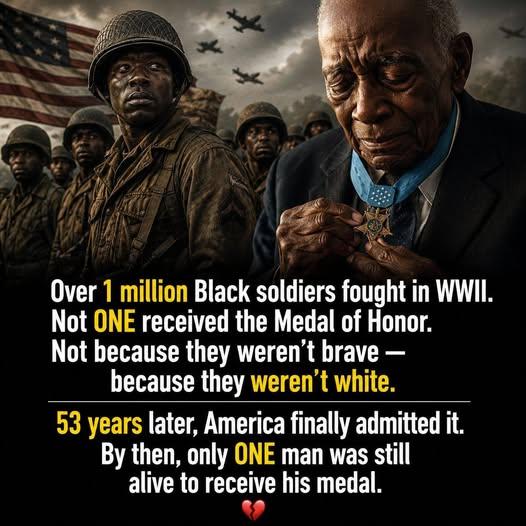


He crawled through minefields. Destroyed enemy bunkers alone. Watched almost every man in his platoon die around him. And when it was over, they gave him a medal — just not the one he earned.
Vernon Baker was one of over a million Black Americans who served in World War II. He fought at Castle Aghinolfi, Italy, in 1945, leading a assault so dangerous that of the 25 men who went in with him, nearly all were killed or wounded. Baker kept going — taking out machine gun nests and watchtowers by himself until the mission was done.
For that, he received the Distinguished Service Cross. Not the Medal of Honor. Because in 1945, the U.S. military simply did not give that medal to Black soldiers. Not one. Out of over a million who served.
It took until 1993 for the Army to even investigate why. A team of historians spent years combing through records. Their conclusion: seven Black WWII soldiers had earned the nation's highest honor and were denied it — not for lack of courage, but because of the color of their skin.
In 1997, President Clinton finally corrected it. Seven men were awarded the Medal of Honor for actions from over 50 years earlier. Six of them were already dead. Vernon Baker was the only one alive to hear his name called.
He stood there and said: "To those that are not here with me... thank you, fellas. Well done. And I will always remember you."
Fifty-three years is a long time to wait for the truth.
What does it say about a country that a soldier can bleed for it — and still have to wait a lifetime just to be believed?
Vernon Baker was one of over a million Black Americans who served in World War II. He fought at Castle Aghinolfi, Italy, in 1945, leading a assault so dangerous that of the 25 men who went in with him, nearly all were killed or wounded. Baker kept going — taking out machine gun nests and watchtowers by himself until the mission was done.
For that, he received the Distinguished Service Cross. Not the Medal of Honor. Because in 1945, the U.S. military simply did not give that medal to Black soldiers. Not one. Out of over a million who served.
It took until 1993 for the Army to even investigate why. A team of historians spent years combing through records. Their conclusion: seven Black WWII soldiers had earned the nation's highest honor and were denied it — not for lack of courage, but because of the color of their skin.
In 1997, President Clinton finally corrected it. Seven men were awarded the Medal of Honor for actions from over 50 years earlier. Six of them were already dead. Vernon Baker was the only one alive to hear his name called.
He stood there and said: "To those that are not here with me... thank you, fellas. Well done. And I will always remember you."
Fifty-three years is a long time to wait for the truth.
What does it say about a country that a soldier can bleed for it — and still have to wait a lifetime just to be believed?
He crawled through minefields. Destroyed enemy bunkers alone. Watched almost every man in his platoon die around him. And when it was over, they gave him a medal — just not the one he earned.
Vernon Baker was one of over a million Black Americans who served in World War II. He fought at Castle Aghinolfi, Italy, in 1945, leading a assault so dangerous that of the 25 men who went in with him, nearly all were killed or wounded. Baker kept going — taking out machine gun nests and watchtowers by himself until the mission was done.
For that, he received the Distinguished Service Cross. Not the Medal of Honor. Because in 1945, the U.S. military simply did not give that medal to Black soldiers. Not one. Out of over a million who served.
It took until 1993 for the Army to even investigate why. A team of historians spent years combing through records. Their conclusion: seven Black WWII soldiers had earned the nation's highest honor and were denied it — not for lack of courage, but because of the color of their skin.
In 1997, President Clinton finally corrected it. Seven men were awarded the Medal of Honor for actions from over 50 years earlier. Six of them were already dead. Vernon Baker was the only one alive to hear his name called.
He stood there and said: "To those that are not here with me... thank you, fellas. Well done. And I will always remember you."
Fifty-three years is a long time to wait for the truth.
What does it say about a country that a soldier can bleed for it — and still have to wait a lifetime just to be believed?