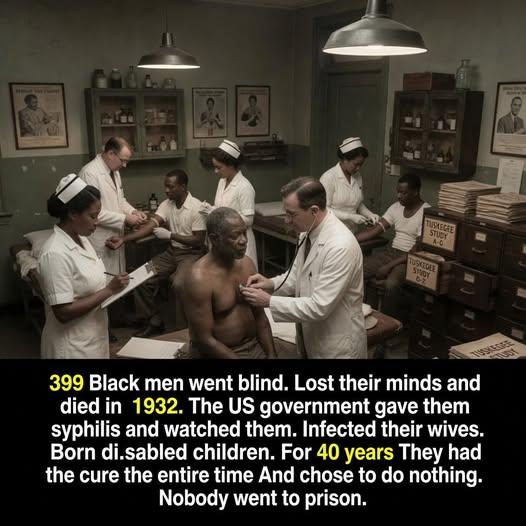


For 40 years, they called it a medical study.
Hundreds of Black men in Alabama trusted government doctors, believing they were receiving treatment for "bad blood." Instead, many were never told they had syphilis, and after penicillin became the standard treatment, it was deliberately withheld from them so researchers could observe the disease.
Some lost their eyesight. Some suffered severe neurological damage. Some died. Some wives contracted the disease, and some children were born with congenital syphilis.
In 1972, the truth finally came to light.
The Tuskegee Syphilis Study remains one of the most notorious ethical failures in American medical history a reminder of why informed consent, transparency, and medical ethics matter.
History should be remembered, even when it's uncomfortable.
Hundreds of Black men in Alabama trusted government doctors, believing they were receiving treatment for "bad blood." Instead, many were never told they had syphilis, and after penicillin became the standard treatment, it was deliberately withheld from them so researchers could observe the disease.
Some lost their eyesight. Some suffered severe neurological damage. Some died. Some wives contracted the disease, and some children were born with congenital syphilis.
In 1972, the truth finally came to light.
The Tuskegee Syphilis Study remains one of the most notorious ethical failures in American medical history a reminder of why informed consent, transparency, and medical ethics matter.
History should be remembered, even when it's uncomfortable.
For 40 years, they called it a medical study.
Hundreds of Black men in Alabama trusted government doctors, believing they were receiving treatment for "bad blood." Instead, many were never told they had syphilis, and after penicillin became the standard treatment, it was deliberately withheld from them so researchers could observe the disease.
Some lost their eyesight. Some suffered severe neurological damage. Some died. Some wives contracted the disease, and some children were born with congenital syphilis.
In 1972, the truth finally came to light.
The Tuskegee Syphilis Study remains one of the most notorious ethical failures in American medical history a reminder of why informed consent, transparency, and medical ethics matter.
History should be remembered, even when it's uncomfortable.