

Yummii

@Yummii

80 Posts
39 Photos
0 Videos
Female
Recent Updates
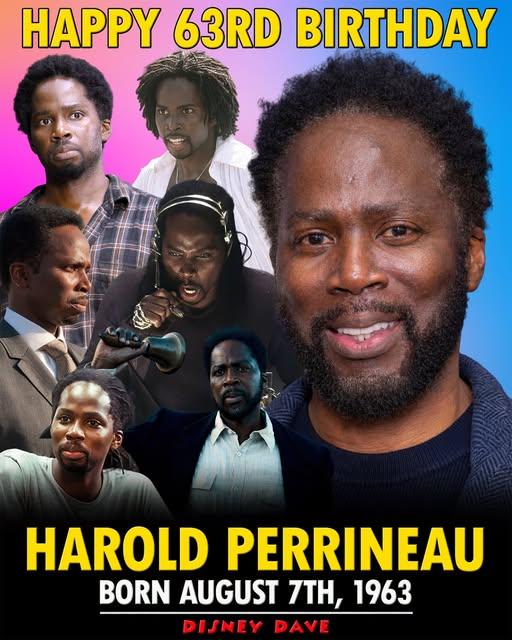
  • Happy 63rd Birthday, Harold Perrineau!
    Born on August 7, 1963, in Brooklyn, New York, Perrineau has built an extraordinary career across television, film, theater, dance and music.
    He was born Harold Perrineau, but his surname was changed to Williams during childhood. When he joined the Screen Actors Guild and discovered another Harold Williams was already registered, he returned to his birth name, using the surname of his mother, Sylvia Perrineau.
    Television audiences know him as Michael Dawson in ABC’s Lost, whose emotional search for his son Walt became one of the show’s most memorable storylines. After leaving as a regular following Season 2, he made a secretive return in Season 4, with Michael hiding aboard the freighter under the alias Kevin Johnson.
    Perrineau previously starred as narrator and inmate Augustus Hill throughout HBO’s groundbreaking prison drama Oz. He now leads MGM+’s supernatural mystery series From as Boyd Stevens, the determined sheriff trying to protect the residents of a nightmarish town from which no one can escape. Season 4 concluded on June 28, 2026, and MGM+ has officially renewed the series for a fifth and final season, expected in 2027.
    His memorable film roles include Mercutio in Baz Luhrmann’s Romeo + Juliet, Link in The Matrix Reloaded and The Matrix Revolutions, Rashid Cole in Smoke, Julian Murch in The Best Man and Flynn in 28 Weeks Later.
    His other television work includes Sons of Anarchy, Constantine, Claws and The Rookie. Marvel fans may also recognize him as the English-language voice of Blade in the 2011 anime series.
    Before his major screen success, Perrineau trained as a dancer and originated the role of Tyrone Jackson in the 1989 world premiere of Fame: The Musical. A talented singer as well, he recorded the R&B/soul track Stay Strong and later released music with producer Tomo in der Muhlen.
    From the Emerald City of Oz and the mysterious island of Lost to the terrifying town of From, Harold Perrineau continues to bring intensity, humanity and unforgettable presence to every performance.
    #haroldperrineau #fromonmgm #lost #thematrix #happybirthday
    Happy 63rd Birthday, Harold Perrineau! Born on August 7, 1963, in Brooklyn, New York, Perrineau has built an extraordinary career across television, film, theater, dance and music. He was born Harold Perrineau, but his surname was changed to Williams during childhood. When he joined the Screen Actors Guild and discovered another Harold Williams was already registered, he returned to his birth name, using the surname of his mother, Sylvia Perrineau. Television audiences know him as Michael Dawson in ABC’s Lost, whose emotional search for his son Walt became one of the show’s most memorable storylines. After leaving as a regular following Season 2, he made a secretive return in Season 4, with Michael hiding aboard the freighter under the alias Kevin Johnson. Perrineau previously starred as narrator and inmate Augustus Hill throughout HBO’s groundbreaking prison drama Oz. He now leads MGM+’s supernatural mystery series From as Boyd Stevens, the determined sheriff trying to protect the residents of a nightmarish town from which no one can escape. Season 4 concluded on June 28, 2026, and MGM+ has officially renewed the series for a fifth and final season, expected in 2027. His memorable film roles include Mercutio in Baz Luhrmann’s Romeo + Juliet, Link in The Matrix Reloaded and The Matrix Revolutions, Rashid Cole in Smoke, Julian Murch in The Best Man and Flynn in 28 Weeks Later. His other television work includes Sons of Anarchy, Constantine, Claws and The Rookie. Marvel fans may also recognize him as the English-language voice of Blade in the 2011 anime series. Before his major screen success, Perrineau trained as a dancer and originated the role of Tyrone Jackson in the 1989 world premiere of Fame: The Musical. A talented singer as well, he recorded the R&B/soul track Stay Strong and later released music with producer Tomo in der Muhlen. From the Emerald City of Oz and the mysterious island of Lost to the terrifying town of From, Harold Perrineau continues to bring intensity, humanity and unforgettable presence to every performance. #haroldperrineau #fromonmgm #lost #thematrix #happybirthday
    Like
    1
    ·
    0 Comments ·0 Shares ·14K Views ·0 Reviews
  • Police said no arrests have been made yet in the case, as the community mourns the loss of a man who they said was working hard to prevent violence on the streets. https://ktla.com/news/local-news/community-activist-killed-hyde-park-shooting/?fbclid=IwY2xjawTkLatwZG9mBWV4dG4DYWVtAjEwAGJyaWQRMWpQemtkUG56S3BjMmtNY29zcnRjBmFwcF9pZBAyMjIwMzkxNzg4MjAwODkyAAEeLY_fytFqNRGdB0_nylMrSbdKvv0b6i9sEzUEjvxjoF1KFhV4a5x8d64PmjU_aem_tX4Jd7J-i4zqPH-NZi5xjQ
    Police said no arrests have been made yet in the case, as the community mourns the loss of a man who they said was working hard to prevent violence on the streets. https://ktla.com/news/local-news/community-activist-killed-hyde-park-shooting/?fbclid=IwY2xjawTkLatwZG9mBWV4dG4DYWVtAjEwAGJyaWQRMWpQemtkUG56S3BjMmtNY29zcnRjBmFwcF9pZBAyMjIwMzkxNzg4MjAwODkyAAEeLY_fytFqNRGdB0_nylMrSbdKvv0b6i9sEzUEjvxjoF1KFhV4a5x8d64PmjU_aem_tX4Jd7J-i4zqPH-NZi5xjQ
    0 Comments ·0 Shares ·10K Views ·0 Reviews
  • video allegedly showing white woman calling police on Black family at pool
    video showing a woman questioning a man about his residency at an Illinois apartment complex pool has ignited a significant debate after circulating on X, Daily Dot reported. The footage, which originated on Facebook from Leo Sullivan, depicts a woman approaching him and his children while they are at the pool.
    video allegedly showing white woman calling police on Black family at pool video showing a woman questioning a man about his residency at an Illinois apartment complex pool has ignited a significant debate after circulating on X, Daily Dot reported. The footage, which originated on Facebook from Leo Sullivan, depicts a woman approaching him and his children while they are at the pool.
    Like
    Love
    2
    ·
    0 Comments ·0 Shares ·16K Views ·0 Reviews
  • he said her booty stink? #prank
    he said her booty stink? #prank
    Like
    1
    ·
    0 Comments ·0 Shares ·4K Views ·0 Reviews
  • He Was Enslaved There — Then He Bought It!
    They couldn't stop him. 🤯 #BlackHistory
    He Was Enslaved There — Then He Bought It! They couldn't stop him. 🤯 #BlackHistory
    Like
    1
    ·
    0 Comments ·0 Shares ·6K Views ·0 Reviews
  • WTF Happened to Miss Cleo, the World's Most Famous TV Psychic?
    https://youtu.be/C9NtguOPsww
    WTF Happened to Miss Cleo, the World's Most Famous TV Psychic? https://youtu.be/C9NtguOPsww
    Like
    2
    ·
    0 Comments ·0 Shares ·1K Views ·0 Reviews
  • There was a time when a Black family couldn't just get in the car and drive across Georgia. You needed a book to tell you where it was safe to stop.
    The Green Book, started in 1936 by Harlem mail carrier Victor Hugo Green, listed hotels, restaurants, gas stations, salons, and private homes across America that would actually serve Black travelers. Georgia had its own listings — Macon's Douglass Hotel, service stations on Atlanta's Auburn Avenue, and more.
    A few things the video didn't have room for: mail carriers were the secret engine of the whole thing. Postmen knew exactly which homes on their routes would take in travelers, and they mailed reams of listings to Green. Readers sent in their own suggestions too — user-generated content decades before the internet. It sold about 15,000 copies a year at its peak, and being listed as a "tourist home" was considered an honor. It stopped publishing in the 1960s after the Civil Rights Act. Most of the buildings are gone now, but a few, like Thomasville's Imperial Hotel, still stand.
    Georgia, did your family ever travel with the Green Book?
    📚 Sources: Smithsonian NMAAHC; Atlanta History Center; NYPL Green Book Archive
    #GreenBook #BlackGeorgiaHistory #JimCrow #BlackTravel #HiddenHistory
    There was a time when a Black family couldn't just get in the car and drive across Georgia. You needed a book to tell you where it was safe to stop. The Green Book, started in 1936 by Harlem mail carrier Victor Hugo Green, listed hotels, restaurants, gas stations, salons, and private homes across America that would actually serve Black travelers. Georgia had its own listings — Macon's Douglass Hotel, service stations on Atlanta's Auburn Avenue, and more. A few things the video didn't have room for: mail carriers were the secret engine of the whole thing. Postmen knew exactly which homes on their routes would take in travelers, and they mailed reams of listings to Green. Readers sent in their own suggestions too — user-generated content decades before the internet. It sold about 15,000 copies a year at its peak, and being listed as a "tourist home" was considered an honor. It stopped publishing in the 1960s after the Civil Rights Act. Most of the buildings are gone now, but a few, like Thomasville's Imperial Hotel, still stand. Georgia, did your family ever travel with the Green Book? 📚 Sources: Smithsonian NMAAHC; Atlanta History Center; NYPL Green Book Archive #GreenBook #BlackGeorgiaHistory #JimCrow #BlackTravel #HiddenHistory
    Like
    Sad
    2
    ·
    0 Comments ·0 Shares ·3K Views ·0 Reviews
  • On this day in 1834 slavery ended in the British Empire, and the compensation went to the slaveholders
    On 1 August 1834, the Slavery Abolition Act came into force across most of the British Empire. On paper, hundreds of thousands of enslaved Africans and their descendants were declared free. It is remembered as one of the great moral corrections in history, and today it is marked as Emancipation Day across Jamaica, Trinidad and Tobago, Barbados, Guyana, Grenada and beyond.
    But read the full title of the law Britain actually passed. An Act for the Abolition of Slavery throughout the British Colonies, for promoting the Industry of the manumitted Slaves, and for compensating the Persons hitherto entitled to the Services of such Slaves. Compensation. Not for the people who had been owned, worked, whipped and sold. For the people who had owned them.
    Britain paid out around £20 million to more than 40,000 slave owners for the loss of what the law called their property. That sum was roughly 40 percent of the entire national budget at the time, one of the largest payouts in British history. The formerly enslaved received nothing at all. Not land, not wages for generations of stolen labour, not a shilling. As one account of the period put it, the prevailing feeling was that their freedom was compensation enough.
    And freedom itself was delayed. Everyone over the age of six was reclassified as an apprentice, forced to keep working unpaid for their former owners, up to 45 hours a week. Household workers were bound for four years, field workers for six. Slavery had simply changed its name.
    The people it was done to saw through it instantly. On that very first day, 1 August 1834, in Port of Spain, Trinidad, a crowd of mostly elderly formerly enslaved people stood before the Governor as he explained the new arrangement, and drowned him out with a chant. Pas de six ans. Point de six ans. Not six years. No six years. They kept protesting until the system broke. Apprenticeship was abolished early, and full freedom came on 1 August 1838. The enslaved freed themselves from the second trap too.
    Now here is the fact that should be taught in every school on this continent and in the diaspora. Because that £20 million was borrowed and partly converted into government annuities, British taxpayers were still repaying the loan used to compensate slave owners until **2015**. Britain spent 180 years paying the families of slaveholders. It has never paid one penny to the descendants of the enslaved.
    So when Britain says today that reparations are too complicated, too historical, too expensive to calculate, remember that it already calculated the value of every enslaved African with total precision. It just paid the money to the wrong people, and kept paying for nearly two centuries.
    #HistoricalAfrica #EmancipationDay #Reparations #BlackHistory #Slavery
    On this day in 1834 slavery ended in the British Empire, and the compensation went to the slaveholders On 1 August 1834, the Slavery Abolition Act came into force across most of the British Empire. On paper, hundreds of thousands of enslaved Africans and their descendants were declared free. It is remembered as one of the great moral corrections in history, and today it is marked as Emancipation Day across Jamaica, Trinidad and Tobago, Barbados, Guyana, Grenada and beyond. But read the full title of the law Britain actually passed. An Act for the Abolition of Slavery throughout the British Colonies, for promoting the Industry of the manumitted Slaves, and for compensating the Persons hitherto entitled to the Services of such Slaves. Compensation. Not for the people who had been owned, worked, whipped and sold. For the people who had owned them. Britain paid out around £20 million to more than 40,000 slave owners for the loss of what the law called their property. That sum was roughly 40 percent of the entire national budget at the time, one of the largest payouts in British history. The formerly enslaved received nothing at all. Not land, not wages for generations of stolen labour, not a shilling. As one account of the period put it, the prevailing feeling was that their freedom was compensation enough. And freedom itself was delayed. Everyone over the age of six was reclassified as an apprentice, forced to keep working unpaid for their former owners, up to 45 hours a week. Household workers were bound for four years, field workers for six. Slavery had simply changed its name. The people it was done to saw through it instantly. On that very first day, 1 August 1834, in Port of Spain, Trinidad, a crowd of mostly elderly formerly enslaved people stood before the Governor as he explained the new arrangement, and drowned him out with a chant. Pas de six ans. Point de six ans. Not six years. No six years. They kept protesting until the system broke. Apprenticeship was abolished early, and full freedom came on 1 August 1838. The enslaved freed themselves from the second trap too. Now here is the fact that should be taught in every school on this continent and in the diaspora. Because that £20 million was borrowed and partly converted into government annuities, British taxpayers were still repaying the loan used to compensate slave owners until **2015**. Britain spent 180 years paying the families of slaveholders. It has never paid one penny to the descendants of the enslaved. So when Britain says today that reparations are too complicated, too historical, too expensive to calculate, remember that it already calculated the value of every enslaved African with total precision. It just paid the money to the wrong people, and kept paying for nearly two centuries. #HistoricalAfrica #EmancipationDay #Reparations #BlackHistory #Slavery
    0 Comments ·0 Shares ·4K Views ·0 Reviews
  • One of the deadliest acts of political violence in American history happened on Easter Sunday and most people have never heard of it.
    On April 13, 1873, in Colfax, Louisiana, hundreds of armed white supremacists attacked the Grant Parish courthouse, where Black citizens and members of the state militia had gathered to defend the results of a disputed local election during Reconstruction.
    Just five years after the Civil War ended, Black men had gained the right to vote and hold public office. In Grant Parish, they helped elect Republican officials. Many white Democrats refused to accept the outcome.
    Determined to seize power by force, an estimated 300 armed men surrounded the courthouse. They fired a cannon into the building and set it ablaze. As the defenders tried to surrender or escape, many were shot where they stood. Others were hunted down and executed after being captured.
    Historians estimate that at least 150 Black men were killed in what became known as the Colfax Massacre, making it one of the bloodiest racial massacres of the Reconstruction era.
    Federal authorities charged 97 men under the Enforcement Acts, laws designed to protect the civil rights of newly freed African Americans.
    But in 1876, the U.S. Supreme Court overturned the convictions in United States v. Cruikshank, ruling that the federal government had only limited power to prosecute individuals for violating the civil rights of others. The decision severely weakened federal enforcement against racial terrorism and emboldened white supremacist groups across the South for decades.
    No one was ultimately held accountable for the massacre.
    The Colfax Massacre remains a powerful reminder of the violent resistance that followed emancipation and of the long struggle to protect the right to vote in the United States.
    History should be remembered not forgotten.
    One of the deadliest acts of political violence in American history happened on Easter Sunday and most people have never heard of it. On April 13, 1873, in Colfax, Louisiana, hundreds of armed white supremacists attacked the Grant Parish courthouse, where Black citizens and members of the state militia had gathered to defend the results of a disputed local election during Reconstruction. Just five years after the Civil War ended, Black men had gained the right to vote and hold public office. In Grant Parish, they helped elect Republican officials. Many white Democrats refused to accept the outcome. Determined to seize power by force, an estimated 300 armed men surrounded the courthouse. They fired a cannon into the building and set it ablaze. As the defenders tried to surrender or escape, many were shot where they stood. Others were hunted down and executed after being captured. Historians estimate that at least 150 Black men were killed in what became known as the Colfax Massacre, making it one of the bloodiest racial massacres of the Reconstruction era. Federal authorities charged 97 men under the Enforcement Acts, laws designed to protect the civil rights of newly freed African Americans. But in 1876, the U.S. Supreme Court overturned the convictions in United States v. Cruikshank, ruling that the federal government had only limited power to prosecute individuals for violating the civil rights of others. The decision severely weakened federal enforcement against racial terrorism and emboldened white supremacist groups across the South for decades. No one was ultimately held accountable for the massacre. The Colfax Massacre remains a powerful reminder of the violent resistance that followed emancipation and of the long struggle to protect the right to vote in the United States. History should be remembered not forgotten.
    Love
    1
    ·
    1 Comments ·0 Shares ·3K Views ·0 Reviews
  • Married life be like 🤣😂
    Married life be like 🤣😂
    0 Comments ·0 Shares ·2K Views ·0 Reviews
  • Imagine being a child... too young to understand hate, but old enough to be denied a meal.
    You don't see anger in this photo.
    You don't hear anyone shouting.
    Just two little girls standing quietly in front of a sign that told them they weren't welcome.
    "We Serve Whites Only."
    No child should have to learn that the world sees them as "less than" before they even understand what those words mean.
    This isn't just a photograph. It's a reminder of a painful chapter that shaped millions of lives and why the fight for dignity and equal treatment mattered so deeply.
    History isn't meant to make us feel comfortable. It's meant to make us remember.
    What would you want every young person to learn from a photo like this?🖤👇
    Imagine being a child... too young to understand hate, but old enough to be denied a meal. You don't see anger in this photo. You don't hear anyone shouting. Just two little girls standing quietly in front of a sign that told them they weren't welcome. "We Serve Whites Only." No child should have to learn that the world sees them as "less than" before they even understand what those words mean. This isn't just a photograph. It's a reminder of a painful chapter that shaped millions of lives and why the fight for dignity and equal treatment mattered so deeply. History isn't meant to make us feel comfortable. It's meant to make us remember. What would you want every young person to learn from a photo like this?🖤👇
    Like
    Sad
    2
    ·
    0 Comments ·0 Shares ·2K Views ·0 Reviews
  • Rose Williams was sixteen years old when her enslaver told her she'd been paired with a man named Rufus to produce children. When Rufus climbed into her bed, she grabbed a fireplace poker. Her mistress told her plainly: "De massa wants yous to raise him chillens." Her enslaver threatened the whipping stake if she refused. She thought about her mother — also bought at the same auction — and made the only choice she had. She had two children. The day she was freed, she left and never returned. In 1937, at over ninety years old, she told a government interviewer everything. "I never marries," she said, "'cause one 'sperience am 'nough."
    #BlackHistory #HiddenHistory #AmericanHistory #SlaveryHistory #historymatters
    Rose Williams was sixteen years old when her enslaver told her she'd been paired with a man named Rufus to produce children. When Rufus climbed into her bed, she grabbed a fireplace poker. Her mistress told her plainly: "De massa wants yous to raise him chillens." Her enslaver threatened the whipping stake if she refused. She thought about her mother — also bought at the same auction — and made the only choice she had. She had two children. The day she was freed, she left and never returned. In 1937, at over ninety years old, she told a government interviewer everything. "I never marries," she said, "'cause one 'sperience am 'nough." #BlackHistory #HiddenHistory #AmericanHistory #SlaveryHistory #historymatters
    0 Comments ·0 Shares ·3K Views ·0 Reviews
More Stories